
Trekking is hardly an unusual activity for the dozen or so guides volunteering at Quetzaltrekkers, but on a quiet weekday we found ourselves climbing up an unfamiliar hill to a mysterious Mayan ceremonial altar.
The reason for this reflects Quetzaltrekkers’ wider mission. While our main focus will always be on raising money to fund Edelac, which runs the school and safe house, we also aim to help the community in which we live.
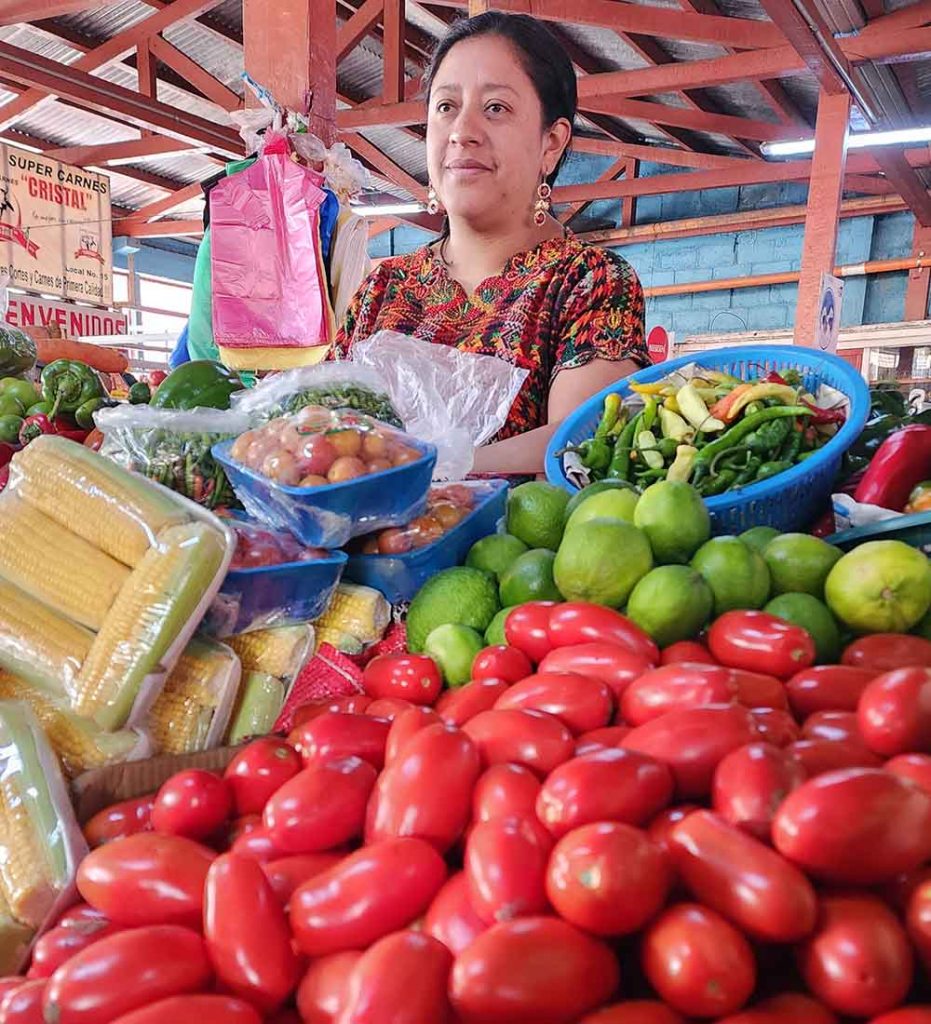
This shows in lots of ways: whenever possible, we buy the food for our hikes at local markets and we employ local guides to help out during the busiest hiking season — including some who were once students at our school and also residents of our safe house.
And we also help the wider community, including with the local tree-planting charity with which Quetzaltrekkers organises occasional reforestation days.
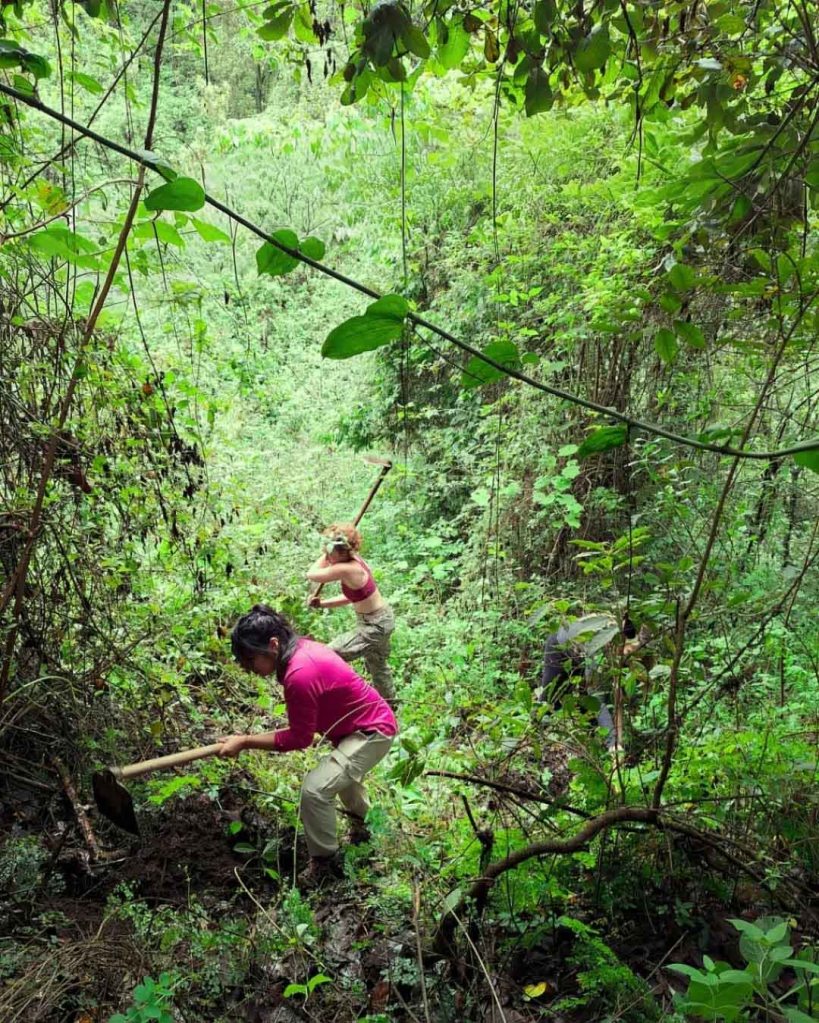
The Chico Mendes Reforestation Project — named after the famous Brazilian environmental activist who was murdered while peacefully defending the Amazon rainforest and the indigenous people who live there — was born in 1998 in Pachaj, a small village on the outskirts of Xela.
It began with Jorge Armando López Pocol, who with two friends and 2,000 seedlings, began reforesting community lands affected by illegal logging. More than 25 years later, Jorge has created two nurseries in Pachaj and plants up to 15,000 trees a year in the surrounding mountains.
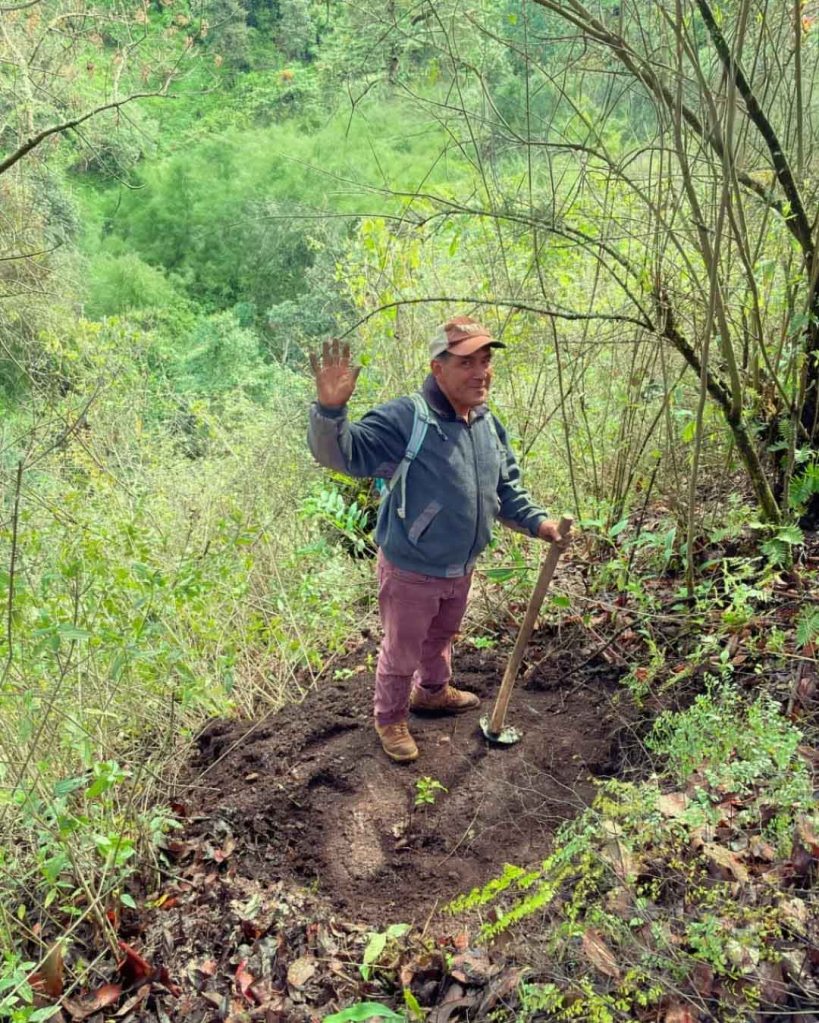
He funds the group’s activities through using volunteers, running a homestay operation, and teaching both Spanish and Ki’che.
But there’s also hopes of both improving the visibility of their work and also raising more money to help fund their operations.
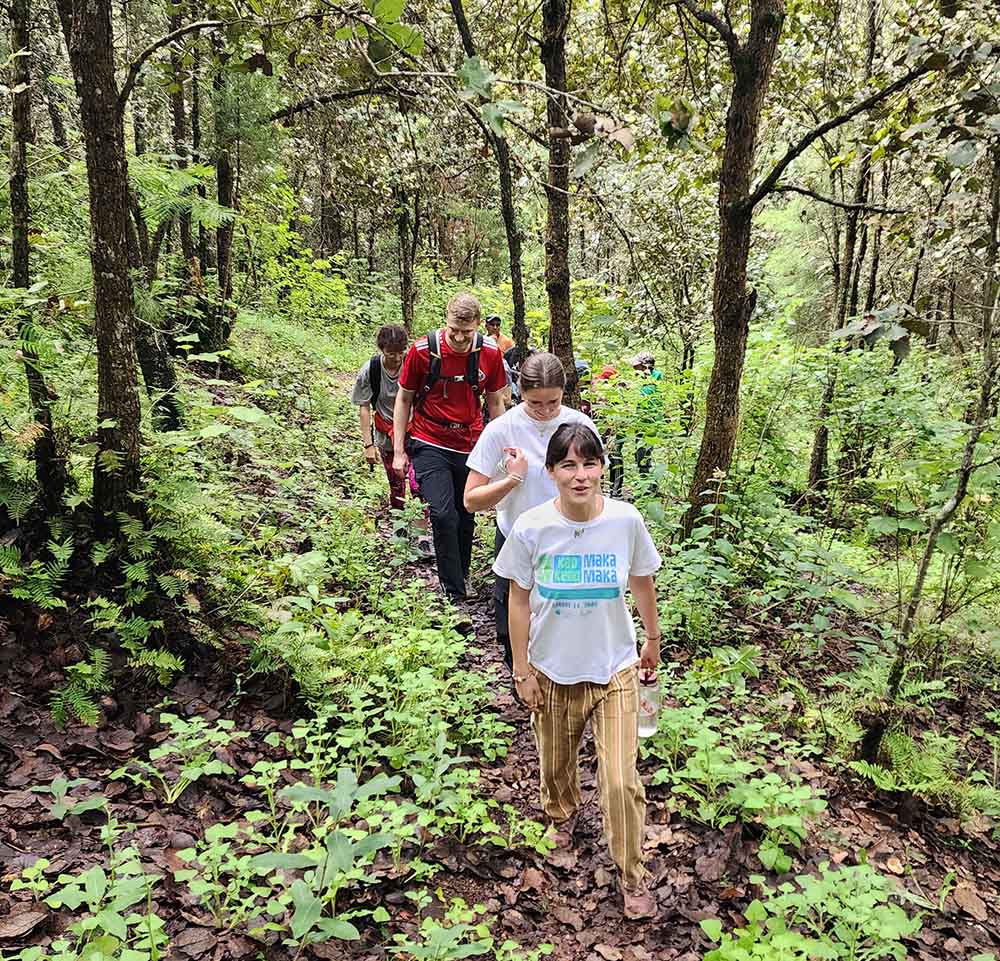
And that’s why a group of Quetzaltrekker volunteer guides and a few others were climbing a hillock outside Pachaj on a recent weekday morning to test out his plan to run hikes.
The route began at the Chico Mendes office then followed a rural road before finally scaling the small but steep forested hill of Cerro Quiac.
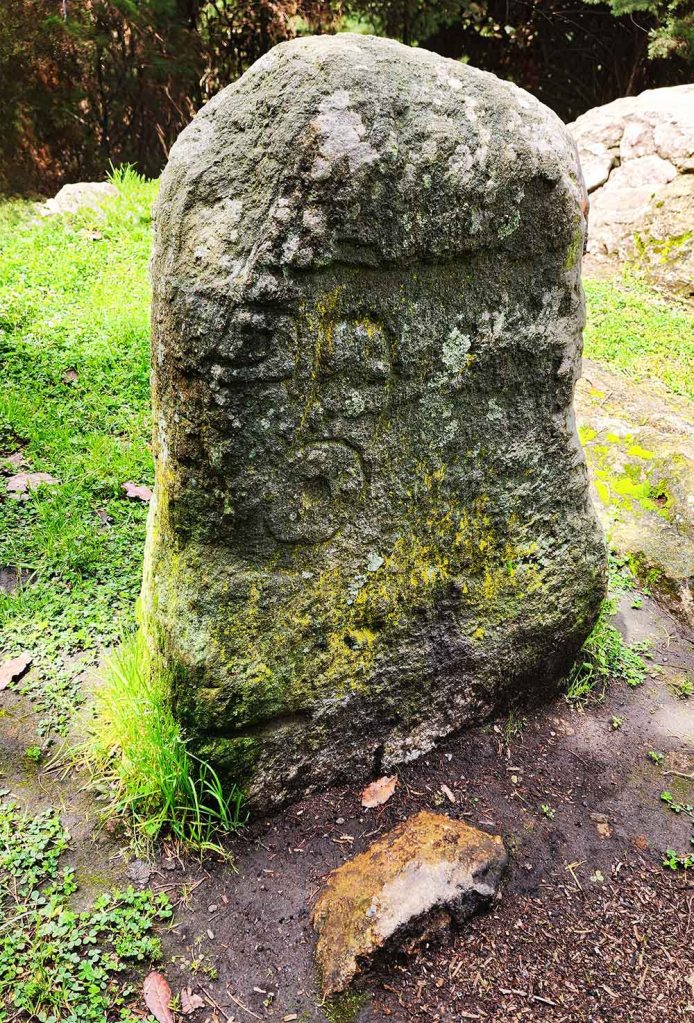
The local Mayan reverence for mountaintops was on display even on this modest summit, with the top featuring a cleared area around a mysterious altar stone — nobody present is aware of exactly what the petroglyphs on it mean — and nearby there was a Mayan fire site for offerings.
The views over the agricultural fields of Pachaj and Xecam were amazing.
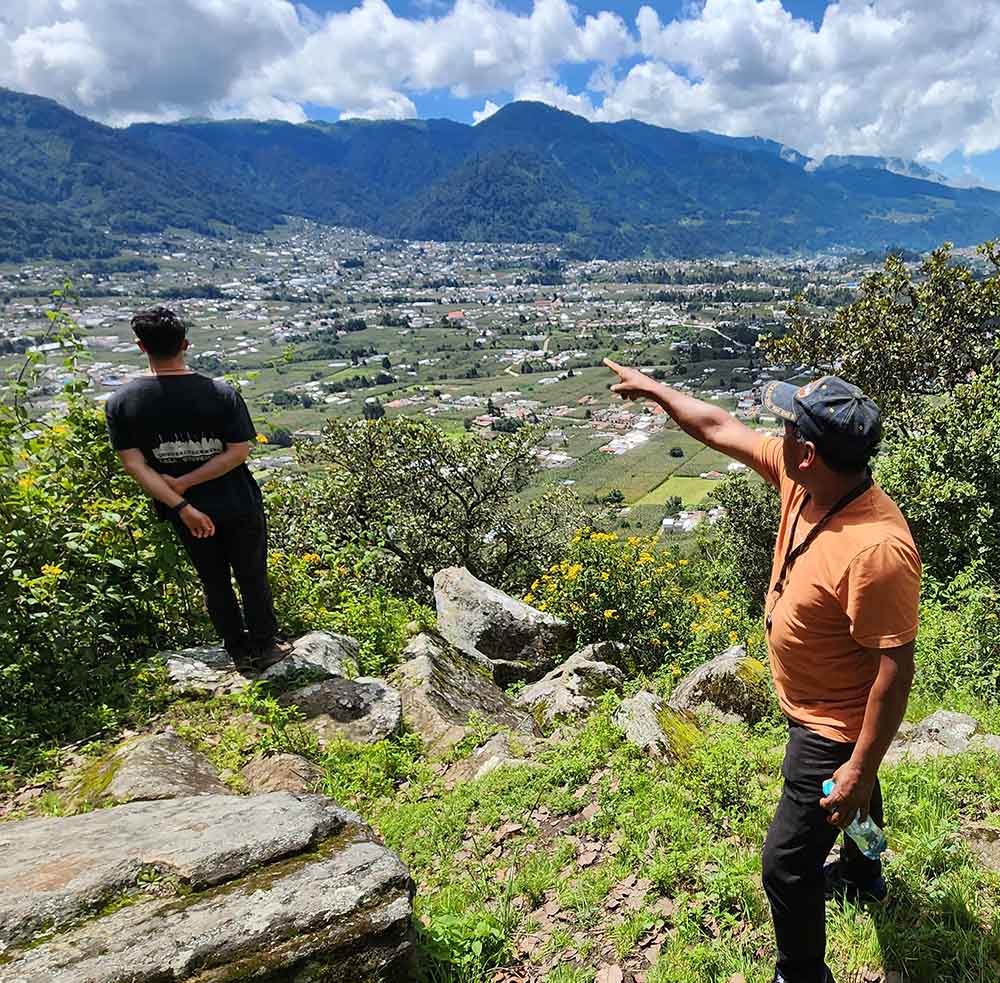
Then we made our way back down the hill for a well-earned lunch of pepian — Guatemala’s national dish — at the office.
The verdict? A surprisingly interesting hike so close to town, involving Mayan mysticism and all to raise money for a good cause. If the guided hikes become a reality, you’ll be able to read about it here.
 Quetzaltrekkers Guides