
Guatemala has a beautifully diverse selection of biomes ranging from extremely dry climates to the luscious tropical rain forests. We will go over the seven most distinct biomes present here in Guatemala as well as the diverse flora and fauna that makes these lands so incredibly magnificent.
An important note on Guatemala’s climate is that it doesn’t follow the typical winter, spring, summer, or fall seasons found elsewhere in the world. Instead, it has been dubbed “Land of Eternal Spring” for its fairly consistent temperatures throughout the year. Even though Guatemala doesn’t have the four seasons, it does have the dry and wet seasons. The dry season typically starts around November through to the beginning of May. The wet season, as you may guess, fills in the gaps starting in May and ending in November.
Now that you have some basic information on Guatemalan weather, let’s get into the amazing plants and animals that have adapted and thrived here for centuries.
Tropical Humid Forest
This biome of Guatemala is characterized by the hot and humid climate primarily found below 3000 feet (915 meters) in elevation.
Tropical Rainforest
As you might be able to guess by the name, the tropical rainforest usually has a higher amount of rainfall and atmospheric humidity than you would find in the tropical humid forest. This biome ranges between sea level and 4300 feet (1300 meters) in elevation. Even through the dry season this biome still finds itself peppered with rain from June to October. This area is also a prime environment for orchids which require a lot of atmospheric humidity.
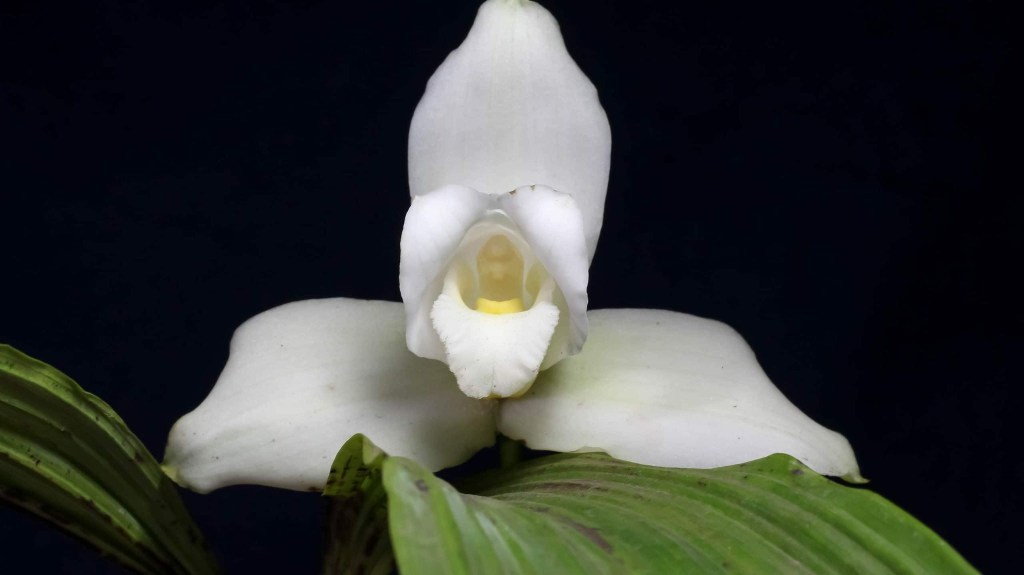
The national flower of Guatemala, La Monja Blanca or The White Nun.
Chaparral or Thorn Dry Scrub
Nestled between 328 and 3280 feet above sea level, you will find this arid-zone complete with cactus and deciduous plants. You can still find it raining here, while very little, between June to October.
Cloud Forest
Cloud forests are incredibly unique and one of my personal favorite biomes throughout the world. This biome can be found spread out on the many mountain slopes between 3600 and 9500 feet. Much of the precipitation found here comes from the filtration of clouds that get caught along these mountain sides. Epiphyates, a class of nonparasitic plant, thrive in this region due to the clouds bringing humidity and nutrients. Other life found here includes small mossy patches, tall tree canopies, and an amazing variety of birds including the Resplendent Quetzal. The Resplendent Quetzal has an amazing cultural significance and has earned the title of Guatemala’s National Bird. As pictured below, males sport a vibrant, strawberry red chest and emerald green feathers. During mating season, the males produce long-lucious feathers that can reach up to three feet long. The female, while a little less extravagant, has a greyish-green head and chest with golden-green upperparts.
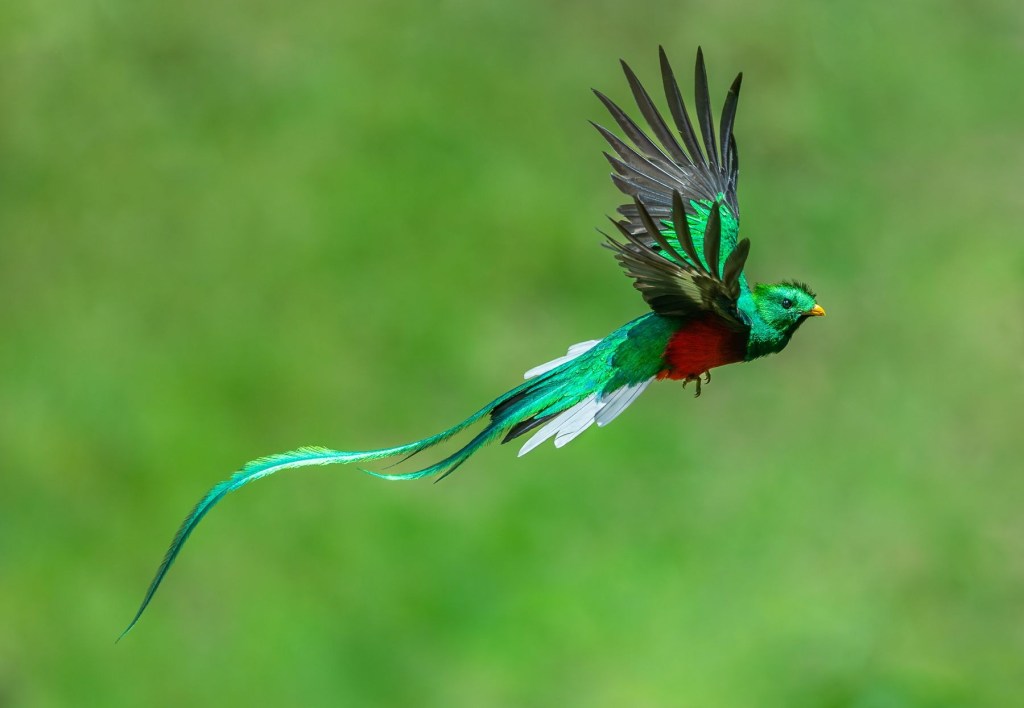
A male Quetzal mid-flight with its long mating feathers trailing behind him. Picture from: Backcountry Journeys
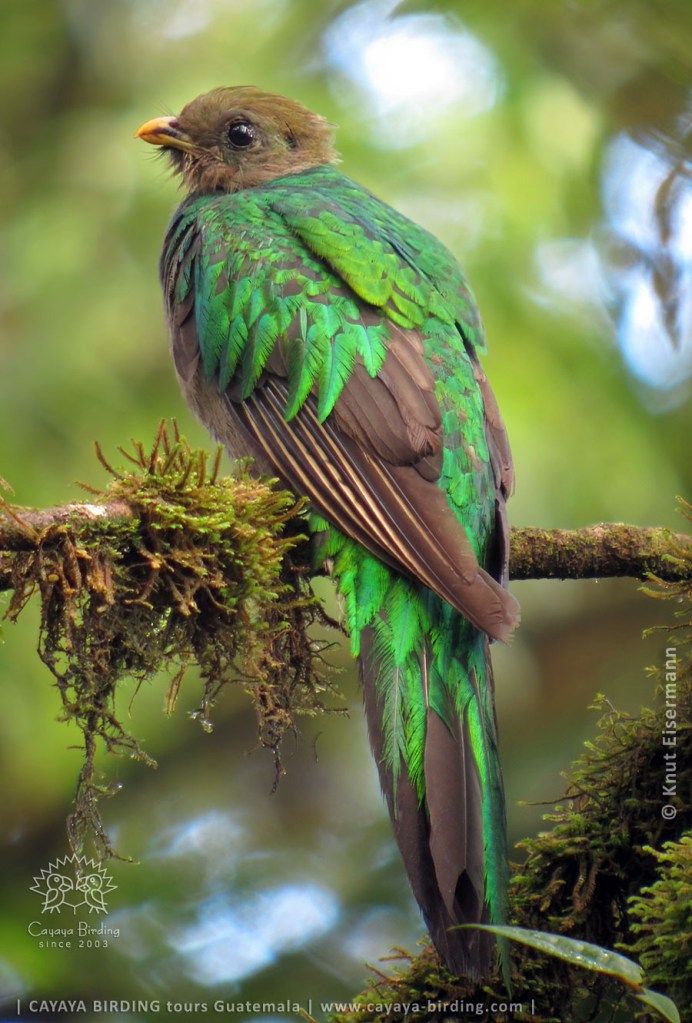
A female Quetzal perched on a branch. Picture from: Cayaya Birding
Mountain Forest
Mountain Forests lay between the elevation of 6560 and 13780 feet harboring flora and fauna that are quite unique to that area. Additionally, this biome is characterized by a cold, but seasonally fluctuating climate. Its biodiversity strongly resembles that found in North America with sparse forestry and a fairly bare forest understory. Birds such as the White-breasted Hawk and the Guatemalan Junco can be found here (For those people who are keen birders!).
Tropical Humid Savannah
This biome is located along the pacific coast all the way up to 2900 feet. Mostly known for its warm climate as farmland has taken a large majority of the original vegetation. Despite the farmland there are still remnants of the original ecosystems that once conquered this area. Many rivers run through this biome as watershed comes down from the mountain range of volcanos found further inland.
Subtropical Humid Forest
Last but certainly not least, we have the Subtropical Humid Forest that is caught in the middle of the Tropical Humid Savannah and the Mountain Forests. With that said, this biome wouldn’t exist without the others because the chain of volcanoes shield it from southern winds making it easier for stormy weather to travel through this area creating diverse vegetation and moderate warmth.
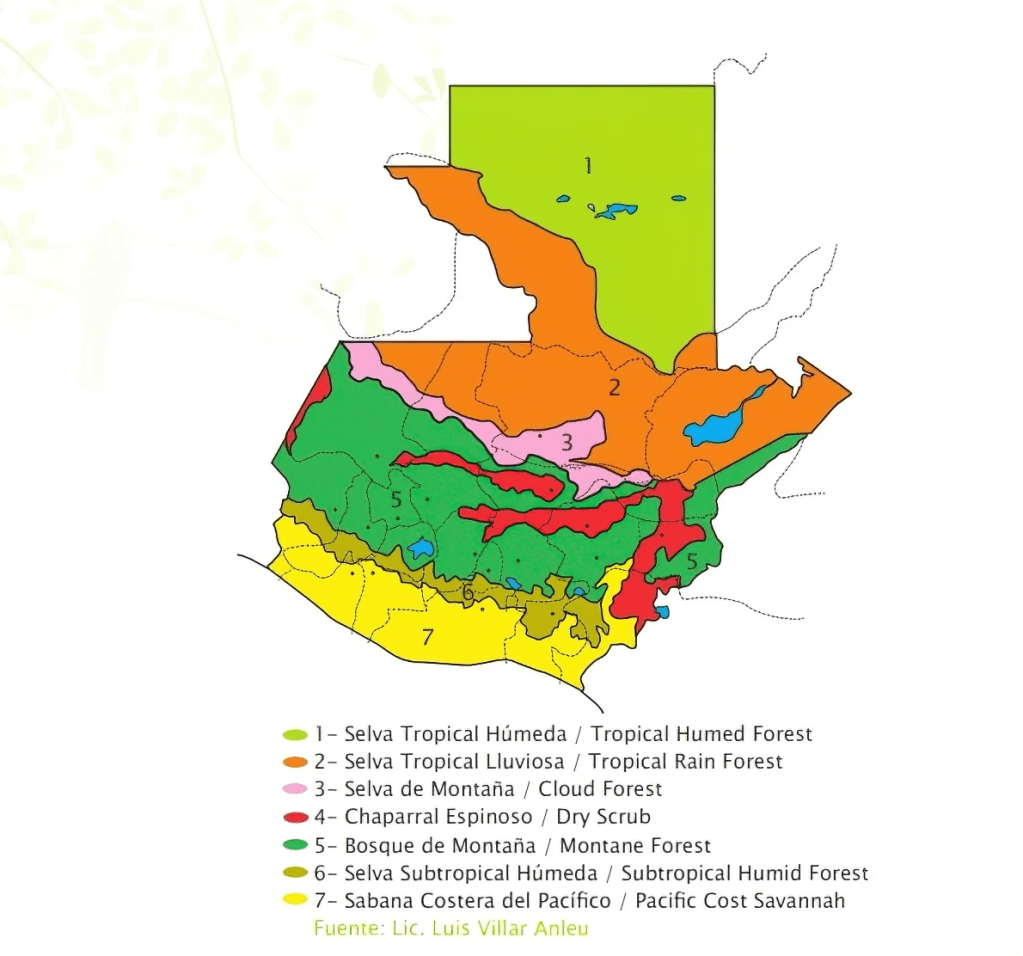
Map of biome distributions found in Guatemala. Map from: Bird Watching Guatemala
Ceiba Tree
As Guatemala’s national tree it deserves its own section for its beauty, uniqueness, and deep spiritual connection to the people of Guatemala. As you can see from the picture below, this tree can grow to an extraordinary size, measuring up to 70 meters high and roots going down roughly 5 meters deep. It can be found from Mexico to South America and even in west Africa!
Almost the entire tree is usable in some way such as the leaves being used as a source of food. The flowers, stems and leaves combined have medicinal properties, the wood is quite strong and resistant making it great for building, the cotton that transports the trees seeds has been used for pillows and mattresses, oil in the seeds have been used for manufacturing soaps and so much more!
In addition, Mayan people believed that this tree could be used as a way of communicating with the underworld. In the book Popol Vuh (a book recounting the mythology and history of the K’iche’ people of Guatemala), the gods planted 5 Ceiba trees. Four of them represented the four cardinal directions and the fifth one planted in the middle represented Xibalbá (underworld).
One more fascination about this tree is that its flowers only bloom at night meaning that most of its important pollinators are actually moths, bats, and other nocturnal fauna found in Guatemala.
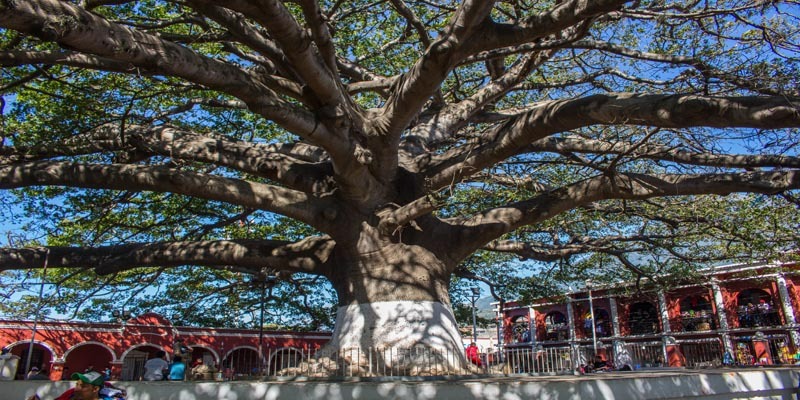
A 400 year old Ceiba tree found in the town of Palín, Guatemala.
As you can see, Guatemala is a heavily diverse and beautiful country no matter what you are looking for in a trip. If you like searching for plants or trying to capture a glimpse of majestic animals this is the place for you! In the end, everything is meticulously interwoven together thanks to the people of the past and present. The life and history woven together by millions of Guatemalan people creating a beautiful textile spanning hundreds of years and still in the works today. Go out and explore the masterpiece that is Guatemala.
References: Biomes of Guatemala
FLAAR Mesoamerica: Why is Ceiba so Important?
FLAAR Mesoamerica: The wild heart of Guatemalans
Discover the National Flower of Guatemala
Article by Mason Orm – QT Guide January – April 2026.

